Why you should visit/importance – Lake Granbury is a small, Government Owned lake located in a section of the Brazos river. It is one of three dammed lakes in the Brazos, and was created in 1969. The lake is roughly 50 years old, and is expected to remain as it is for the near future as long as the Brazos river remains intact. Like many lakes in Texas, Lake Granbury was created primarily for recreation, although it also frees more habitable land downstream that would otherwise be submerged in water. There are 5 public boat ramps on the lake, and there are various fishing locations and camping spots surrounding the lake. Popular game fish in the area include striped bass, large mouth bass, and Flathead catfish. (Because of possible chemical exposure, it is recommended that children and pregnant women consume no more than two 8 oz servings of large mouth and striped bass per month, so yes, fish caught in the lake can be eaten, but with some safety regulations in mind.) Besides its recreational purposes, some of the area surrounding the lake are preserved for wilderness and offer crucial habitats to species that have otherwise been impacted by the rapid development in the area over the last few decades.
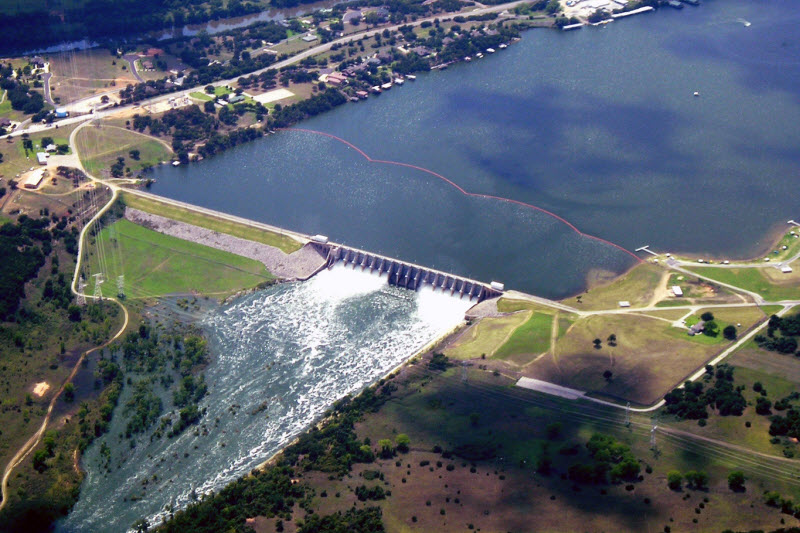
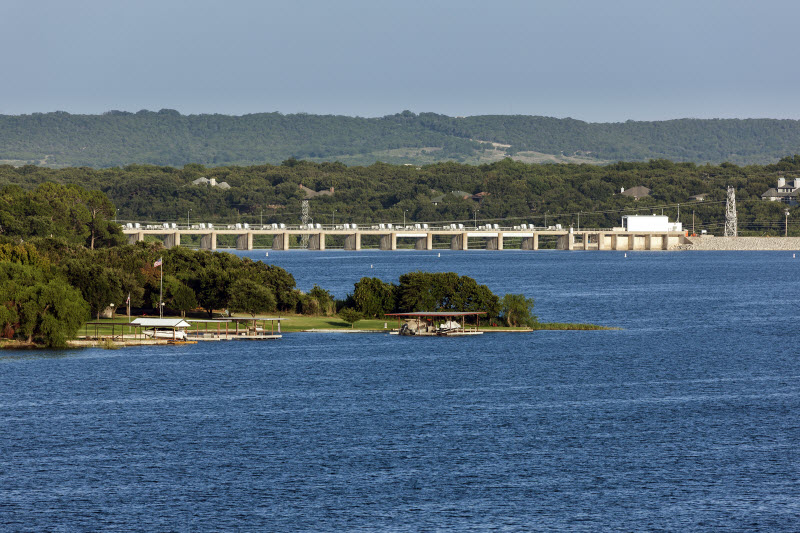
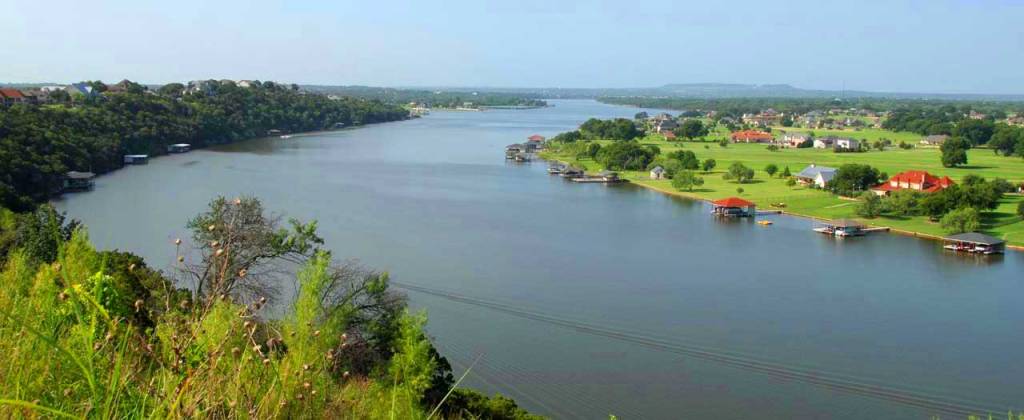
Rivers Entering the Lake – Lake Granbury is actually in the middle of the Brazos river at one of its wider sections. Because Lake Granbury is very small, there are no other significant rivers flowing into it.
Major Threats/Pollution – Plants such as giant salvinia, a floating plant native to Brazil, are especially threatening to Lake Granbury and other regions throughout the Brazos River as it grows quickly and can blanket entire lakes. This growth affects Texas fish by replacing native plants that serve as food and blocking sunlight resulting in a decrease of oxygen concentration in water. Other invasive water plants that can threaten the Brazos River and lake Granbury include hydrilla, water hyacinth, alligatorweed and water lettuce. There are no other known threats or pollution problems within the lake.
However, the Brazos river does have some known pollution problems. The Dow Chemical Company, in Freeport, TX, a polluter of the Brazos River, is a business that uses chemical and biological science to solve some of the world’s problems, such as the need for fresh food, sustainable transportation, clean water, durable infrastructure, and increasing agricultural productivity. The company’s plant had a chemical runoff, which flowed into the Brazos River. The Texas Tribune stated that 3 pounds of dioxin, an “extremely toxic chemical, that can cause reproductive and developmental problems, immune system damage and cancer,” polluted the river due to the plant’s runoff. This is an example of point source pollution, and although it does not occur in lake Granbury itself, it is in the same river which feeds the lake. Non-point source pollution includes trash and leachate from landfills that eventually ends up in the Brazos river, which ultimately contaminate the larger water supply.
Source – https://www.arcgis.com/apps/MapJournal/index.html?appid=8ab1ab5d352a4e5898d253b1a83b58b2
Turnover – Like all Texas lakes, Lake Granbury turns over every fall, which causes the water to be filled with sediment and have a different odor and color than other times of the year. This time of year is more challenging for fishing because of the increased sediment and organic matter forced to the surface, although it is still possible if you are an experienced angler.
The lake is not used as a source of drinking water, as it is primarily used for recreational purposes. Recreation on the lake includes fishing, swimming, boating, water skiing, tubing, as well as any other generic recreational actives on lakes. Lake Granbury has multiple arenas with available rental boats for recreation.
Endangered Species in the area – Although the endangered species in the area are primarily birds, two amphibians include the Chorus Frog and Woodhouse’s Toad. Well known endangered birds include the White Faced Ibis, Bald Eagle, Whooping Crane, and Black Rail.
Granbury lake is for the most part 75 feet deep, and Flathead catfish can be found at that depth. Striped bass, White bass, Largemouth bass, Longnosed Gar, Crappie, Sunfish, and Channel Catfish are also plentiful in the lake.
 Aquatic Science Blog